Cloud networks are the wave of the future. The ability to access your business assets anywhere is attractive to many companies—especially those with a remote team. However, protecting digital assets requires sophisticated knowledge and foresight.
The cloud services market is a $266.4 billion industry and growing yearly. As with anything online, though, cybercriminals will try to find ways to access personal information or take systems down. Protecting your business’s assets is a vital step in ensuring your customer and business data stays safe.
Cloud security is often a concern of small-business owners. Some may even shy away from cloud computing due to fears of exposing trade secrets or customer lists. That said, you can take steps to protect your business’s assets while reaping the benefits.
1. Choose the Right Provider
Your first step should involve choosing your cloud provider wisely. What steps do they take to ensure secure digital assets? Top cloud-based hosting companies have the best security software imaginable. Because they represent numerous clients, they can invest more in world-class protection.
Ask how they back up information. What happens if a hack does occur? Find out how frequently they update their security systems and what they do to identify and quarantine potential threats.
2. Match Specialties
Some cloud providers specialize in working with particular industries. A company that already has clients in your sector better understands your specific security needs. Cloud migration can take endless hours of moving databases to a new setup. It helps to know which system you want and why.
Find a provider willing to move information over for you in a secure environment so you start the process with less risk.
3. Secure Your Wi-Fi
It doesn’t matter who your provider is if the devices used to access data are compromised. Make sure company Wi-Fi is secure so that non-authorized people can’t log in and watch what your employees are doing. Instead, set up a guest Wi-Fi if you want to provide convenient Wi-Fi connectivity to on-premises visitors.
The Covid-19 pandemic showed us that remote work environments are effective. Your IT department should pay particular attention to security concerns for employees working off-premises. If remote staff needs to access information from the main office, set up a secure VPN network that’s resistant to cyber-attacks.
4. Require Regular Password Resets
Require your workers to reset their passwords for logging into the office network every 45 days or so. Set complexity rules around the types they can create, don’t allow repeated passwords, and ask them to protect their current login information. Multi-factor authentication, where users receive a secondary verification code on a trusted mobile phone, is a must.
Although not as common as some other attack vectors, there have been occasions when someone works at a coffee shop and a nearby table notes their login and steals it to access a company website.
5. Security
Just because news of corporate data compromise no longer dominates the headlines, breaches are still happening. Most in-house IT staff are well-versed in a number of disciplines, but effective data security practices are a moving target.
Consider hiring a 3rd-party cybersecurity expert. The level of creativity and malice of today’s data theft actors is astonishing and they only need to succeed one time. To avoid catastrophe, your security needs to be right every time.
Today’s outsourced cybersecurity firms offer surprisingly inexpensive services to help businesses stop attacks before they occur.
6. Train Employees
One of the top things you can do is train your employees in cybersecurity. Explain spoofing and phishing and how they can avoid it. Set policies to never request password information in an email.
Spend time refreshing your staff about how to keep data secure every so often. They should be very careful when working in public locations.
Should you need to terminate an employee, make sure their account credentials are disabled immediately. Otherwise, you open your brand up to vengeance attacks.
7. Keep Backups
Even if the cloud hosting company you use keeps regular backups, and most do, make sure you keep them as well. In the case of a severe cyberattack, your entire system, website, and online presence may go down.
The best way to get back online fast and avoid revenue loss is with a recent backup. However, it might take days to restore everything if you don’t. Develop a business continuity and disaster recovery plan before a catastrophe happens. In a worst-case scenario, you risk losing some data forever.
8. Keep Sensitive Data Offline
If your company has some truly sensitive data because you work with patients or the government, consider keeping some things off the internet. No matter how much software you install or how robust your security is, there’s always a chance of hacking.
If something is extremely sensitive, you can code it and use that for your online entries or just take that information to your private servers. However, they must also be kept secure.
9. Encrypt at the File Level
Even if your cloud provider uses encryption, add another layer of protection by encrypting before you upload your files. You’ll need something your remote workers can access, but it’s crucial to take that one added step to prevent sensitive data leaks.
Use database sharding to break up sections and store them in different locations to further protect documents. They may breach your network, but they aren’t likely to find the full information they need to steal private information. They’ll only have bits and pieces.
Business Cloud Security
The rate of cyberattacks has grown in the past year. More people are online, and businesses have to be remote-work-friendly. Cybercriminals are taking advantage of this, but you can stop them in their tracks—and protect business assets on the cloud—by following a few of the tips mentioned above.
Think about the different ways you might open yourself up to an attack and take steps to stop it before it happens. Your cloud provider can help by putting protections in place, and you can ramp up security on your end, too.
In today’s digital day and age, clout is currency—the more you have it, you’ll get more people to trust and do business with you. Industry leadership is the paramount reason why thought leadership is important for businesses, new and old.
Hence, integrating it into your digital marketing strategies is critical to ensure that you acquiring and retaining customers. Through expertly executed thought leadership practices, your growth isn’t limited to search engine optimization. Ultimately, it strengthens your brand presence and asserts your business value in an authoritative, authentic, and trustworthy way.
And, in a digital landscape that has grown tired of half-baked tips, this trust becomes the fuel for accelerating and generating sustainable growth.
Benefits Of Being A Thought Leader
To paint you a better picture of why thought leadership is important, here are some benefits you can look forward to as a growing business owner:
1. Allows you to share your expertise in your field
As a thought leader, you’re given the chance to show how knowledgeable you are in your industry. Then, when you apply your knowledge into must-have solutions for your audience, it becomes a buy-in for customers and encourages them to come back to you for more.
That’s added reach for and better-quality business, all for the effort of a few expert thoughts. So be sure to find every possible opportunity to give value to your audience such as writing guest blogs, guest-speaking at events, and more.
2. It creates an avenue to present your unique way of thinking
Thought leadership is a process of sharing new ideas. Hence, growing business owners like yourself who have a new take on providing relevant solutions can surpass even larger corporations.
There’s no one company that offers the best-fit solutions for each customer. And if you’re coming into the playing field offering something different, then the best way to ring it in is through thought leadership.
People are always looking for new solutions to old problems in their niche. When you show that you can deliver these, you become authoritative, carving a new path that’s easily recognizable in your industry.
3. Puts a spotlight on your business and unique brand value
By creating thought leadership content, you brand your business as an authority, telling audiences “My brand is exactly what you need.”
As a result, more people will start valuing your work and, eventually, what your business is selling. If you continue doing so, you’ll soon find yourself not just the owner of a growing business, but a successful and influential one, too.
4. Allows you to foster connections with industry peers
Collaboration is a key facet of marketing that opens doors for all constituents. For thought leadership, in particular, it is necessary to build relationships with industry peers.
Because the digital public relations process requires reaching out and, in turn, being open to outreach efforts you are able to build and nurture connections in your field. This fosters trust through the act of creating beneficial guest content for one another and, incidentally, each other’s audiences.
This collaborative process in thought leadership affords you opportunities to:
publish on various platforms
access a wider, newer audience
establish your brand as a pillar in the industry
But collaboration doesn’t just end in the creation of content. Once your peers recognize the value of your business and perspectives, it can potentially open the floodgates for higher-value and meaningful partnerships.
How To Build A Successful Thought Leadership Strategy
Now that you know the benefits of being a thought leader, these steps will help you become one today:
1. Set clear and realistic goals
Success is attained through small, consistent steps every day – not one giant leap forward. That’s why you have to create goals that impact your business, but are still doable with the available resources at hand.
In the case of thought leadership, you can pin down the following goals as a measure of success:
Reach. Is the amount of people you are able to talk to through your content – on websites, or others. Publishing these outside of your website and on the websites of peers and/or media helps you boost this metric not just in quantity but in quality, as well.
Traffic. Is fundamental to generating conversions and improving search rankings. Unlike reach, traffic is closer to an engagement metric as audiences click and find their way to your website.
Improving this through thought leadership is a trust signal to search engines and gives you more opportunities to capture leads.
Domain authority. Is a metric that signals the strength and authoritativeness of your websites. Measure through Moz’s MozBar, it’s a rough estimate of how trustworthy your website is.
This metric improves the more you contribute guest blogs to high-authority websites which, in turn, helps you rank better on search engines.
Engagement. Engagement tracking means you’re looking for people interacting with your content. If your audience continuously reacts, comments, or shares your content, then it means you delivered something useful for them.
Conversion. Finally, conversions mean if your audience does exactly what you want them to do.
Conversions could mean a lot of things such as buying your product or service or downloading your e-book. Whatever the case, conversions show that all your efforts have convinced your audience to take a chance on your brand.
With these metrics tracked, you can better understand how well (or not) your thought leadership efforts are faring from different angles – something impossible to do when only viewing success as one whole picture.
2. Establish a powerful brand message
With your goals pinned down, it’s time to communicate and achieve them. To create a unique brand voice for your content, focus on creating content that speaks directly to the target audience’s needs and aspirations.
By doing so, you’ll learn how to ensure every piece of content you publish makes your audience feel heard. After all, your main goal is to give them solutions that can help them with their ongoing struggles.
Once you do this, watch as ordinary visitors transform into life-long fans of your content and brand.
3. Conduct thorough keyword research
Finding the keywords and publications your target audiences use allows you to make your business’ presence be known – increasing your chances of finding more avid supporters.
To conduct keyword research, be sure to follow these steps:
List down keywords related to your brand and business.
Identify matching terms and related keywords you want to write content about.
Establish which websites are linking to content produced around these keywords.
Determine which websites are linking to content produced around these keywords.
Develop topics based on the target website you want to pitch to, and the content gap identified for their audiences.
Now that you know how to do keyword research, you’re now ready to pitch your content.
4. Ready your pitches
Prepare suggested outlines and titles for the content you want to offer your targeted website publishers. By doing so, you’re effectively selling your content to the publisher, increasing the content’s chance of getting posted on the website.
Make sure your content is also valuable to your host publisher by following this step-by-step process:
Offer something unique that the publisher’s many writers haven’t addressed in their content yet.
Provide the editor with a list of topics you want to write about to make their selection process easier.
Be professional whenever you’re communicating to the publisher by being brief with your emails. However, ensure that these emails have all the essential details about your pitch.
Have a clear CTA at the end of your message that encourages the editor to respond to your pitches.
Email as many publishers as you can to increase your chances of getting a guest content spot – this is still a numbers game, after all.
By following these steps, you can create guest content that resonates that would surely catch the publisher’s eye.
5. Devise an outreach strategy
Good thought leaders devise outreach strategies that know how to effectively catch the attention of publishers and experts.
Here’s how you do it:
Ready an outreach list of the websites you want to get featured on.
Reach out as an authority by expressing interest to contribute to the website as a leader in your organization.
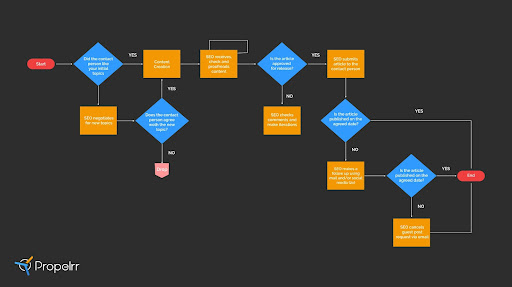
Develop a decision-making process for which pitches to pursue or drop (see the image below).
6. Create the content
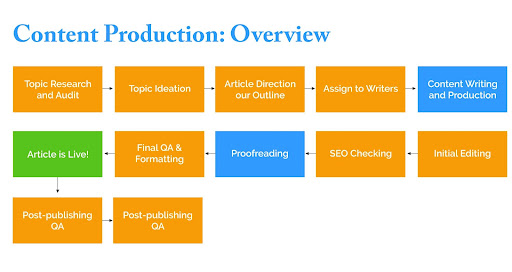
To be a true thought leader, you must master various content creation skills like writing, doing research, public speaking, and more. You’ll develop these skills when you follow this flowchart:
When you consistently follow this flowchart, you’re slowly building your skillset towards that of an effective thought leader – so keep on practicing!
7. Choose your platforms
The great thing about the internet is that there are endless possibilities to share your brand’s message. Whether it’s a blog through your own site, TikTok or YouTube videos, or through tweets, your message can reach so many people today.
To help you get the best results, here are some ideas you could use for different social media platforms:
Twitter. A great way to be a thought leader on this platform is by leveraging Twitter Spaces or creating concise threads detailing a specific topic. These efforts would result in more eyes on your Twitter page since you’re giving so much content.
YouTube/video-capable social media platforms. For YouTube or any other platforms with video, such as Facebook, you may opt to create long or short-form webinars. This works because these platforms’ users learn while watching.
Instagram. Instagram, on the other hand, encourages you to create must-know industry infographics so that your target audience are always on the loop on the latest trends.
TikTok. A great way to get eyes on TikTok as a thought leader is by getting the highlights from your best-performing videos and uploading them on the platform. Doing so allows you to whet TikTok user’s appetite for your content as you give them something short and sweet.
8. Measure and monitor your content performance
With your strong brand message now shared throughout different online platforms, it’s time to see if any of your plans worked.
Here are some must-have tools to do this:
Referral traffic. Using Google Analytics, you can view how effective your guest blogs are at acquiring audiences by looking at referral traffic. High referral traffic from sites you knowingly submitted articles is a good sign that your content has resonated with your collaborator’s audience.
Backlinks. This specific metric can be viewed through Ahrefs’ Backlink Audit feature. It allows you to perform an analysis of the links that lead back to your website. Don’t just look at the number of links you acquire, but look at the quality, too.
Low-quality links (usually under 30 in domain rating) can pull down your domain authority and website health versus higher quality ones (domain rating of 30 and above).
Monitoring these metrics accordingly will help you better understand what works and what doesn’t for your thought leadership efforts.
Thought Leadership in Action
Now that you know the facts, it’s time you knew what effective thought leadership looked like in action:
Propelrr. We at Propelrr dabble in writing guest blogs to help us become an authoritative digital marketing company. In this article, we talk about how impactful doing survey experiments to achieve a brand’s bottom line.
Additionally, we’ve done guest blogging for big media like Rappler, did guesting in podcasts like ‘A Better Normal’ by PumaPodcast, and other blog publications of related businesses. These efforts resulted in higher referral traffic to our site.
Jay Shetty. Jay Shetty is a life coach who shares many of his teachings through his YouTube channel, podcast, live guest speaking, and several books he authored.
As a result, his YouTube channel has 4.67 million subscribers, his podcast, On Purpose, has 937,000 listeners, and his book, Think Like a Monk, is a constant bestseller.
Deloitte. Professional services firm, Deloitte, shares its tech expertise and more on a free podcast called On Cloud.
Because of the podcast’s accessibility, it’s one of the most highly rated tech podcasts out there, receiving a 4.7 out of 5 reviews on Apple Podcasts, and currently, has a 216-episode count.
Key Takeaways
To be a true thought leader, you must develop a voice that can never be drowned by others in today’s saturated digital landscape. With it, you’d become an authoritative presence among thousands in your industry.
To do so, remember the lessons:
Be unique. Read, watch, or listen to as much business-related content as possible so you can offer unique insights to your audience.
Try different approaches. Take part in different activities like podcasting and guest blogging to build authority and reputation among multiple channels.
Keep on improving yourself. Improve your knowledge and skills to give your audience relevant solutions to their current problems.
Finding the will to overcome the many challenges of being a thought leader is no easy feat. When you do, however, you’d be rewarded with the attention of your growing audience base.
Lumberton, NJ (March 31st, 2023)- G2, the leading provider of business software reviews, has named Striven as the #1 ERP software solution on their Spring 2023 ‘Best Results’ list.
What criteria is the ‘Best Results’ list based off of?
The G2 ‘Best Results’ list takes into account 5 specific areas of feedback provided by customers:
• Likelihood to Recommend • Meets Requirements • Estimated ROI • Time To Go Live • Average User Adoption
Striven’s ranking as the ERP system with the ‘Best Results’ for Spring ’23 underscores a growing trend that has continued to gain prevalence in the business world within the last several years—growing businesses are continuing to turn to all-in-one software solutions to save time, increase revenue, and streamline overall business operations.
Striven is ranked above other notable ERP software products including Sage Intacct, Odoo ERP, Acumatica, NetSuite, and Quickbooks Enterprise.
In addition to receiving the #1 ‘Best Results’ ranking, Striven was also named #2 on G2’s Spring ’23 ‘Momentum Leader’ report, as well as #5 in the ‘Small Business Leader’ Spring ’23 category.
Feedback From Users
G2’s rankings are directly sourced from real customer feedback. Here are some things that users recently had to say about Striven:
“Love the product. Recommend to many companies. What I like best about Striven is that it’s an all-in-one platform that includes financials to replace Quickbooks.”– Jeff S, Business Owner
“We use Striven extensively for client, staff and project tracking; we have found it to be a seamless solution. I especially like the ability to design surveys, assessments and reports on the fly for up-to-the minute information.” –Lil D, Customer Experience Director
“Striven is great for our growing business. It’s very user-friendly and, being internet based, it is accessible from anywhere! The way it is laid out makes it easy to edit and add information. Cannot beat the quality for the price and customer service has been great!”– Jenna H, Office Manager
About Striven Striven is an all in one ERP software for small and growing businesses that want to expand, simplify, and reduce costs. Striven combines all of the features for accounting, projects, sales, inventory, operations, reporting, and more into a single streamlined system.
Small business leaders know that effective management is essential to the success of their enterprise. Part of their business management strategy is to build a team that is motivated, skilled and committed to achieving business goals.
Yet, how can you ensure your employees are growing and developing while maintaining a productive and positive workplace culture? The answer lies in mentorship. Discover why mentorship should be the foundation of your business management strategy and how it will benefit your business for years.
The Benefits of Mentorship
One of the key benefits of mentorship is its ability to build a substantial team. Employees with a mentor invested in their success are more likely to feel valued and engaged in their work. In turn, this leads to increased job satisfaction, employee retention and a more positive workplace culture.
Additionally, mentorship has the power to foster diversity, leading underrepresented employees to achieve their career goals. By providing minorities and LGBTQ+ employees with mentors, they can navigate the unique challenges they face in the workplace.
On the other hand, businesses can cultivate a more inclusive and equitable organizational culture. While mentorship benefits individuals, companies can build more diversity and innovation as a whole.
Furthermore, mentorship encourages professional growth, allowing employees to learn new skills. Mentorship is a powerful tool for businesses and their employees because it contributes to their growth and success. By investing in your teams, you ensure they are constantly improving and adapting to new challenges.
Implementing Mentorship in Your Business Management Strategy
Enforcing mentorship in your business management strategy is a crucial step toward building a strong and successful team. Here are some steps to consider when developing a mentorship program in your small business:
Define your goals: Identifying your goals and how mentorship will help you achieve them before implementing a mentorship program is important. Whether you’re looking to increase employee retention or foster a more inclusive workplace, ensure you clearly define your goals.
Identify mentors: Once you’ve established your goals, you can start determining those who fit the mentor role. Consider looking for employees with the skills and experience necessary to provide valuable guidance and support to their mentees.
Encourage participation: Ensure your employees understand the benefits of mentorship and encourage them to participate. You can achieve this by having one-on-one conversations and informational meetings.
Establish guidelines: Ensure your mentorship program is effective by establishing clear procedures for mentors and mentees. This can include setting goals, establishing communication channels and outlining expectations.
Provide support: As the program progresses, it’s imperative that you provide support for your mentors and team members. This can include training, ongoing feedback and resources to help them achieve their goals.
By following these steps, you can create a mentorship program that meets your business’s and its employees’ needs. Plus, the right program will allow you to foster a culture of learning and growth that will benefit your business for years to come.
The Challenges of Implementing Mentorship
While mentorship can provide immense benefits to small businesses, implementing them can also come with its own set of challenges. For instance, organizing a mentorship program may require changing your company’s operations.
As with any business that intends to make changes, some employees may be reluctant to be open to them. However, you can address this obstacle by communicating what they get from the program. Also, consider involving them in the development process so they understand the benefits behind it.
Additionally, mentorship programs require time, effort and money to build effectively. Ultimately, this can be a challenge for small businesses with limited resources. Companies can overcome this by partnering with an external organization or leveraging technology to streamline the process.
Finally, without intentional effort, mentorship programs can inadvertently exclude underrepresented groups. This can limit the benefits of the agenda for the business overall. Nevertheless, you can defeat this by intentionally seeking diverse mentors and mentees. From there, you should train mentors on how to support individuals from different backgrounds.
Examples of Successful Mentorship Programs
Plenty of mentorship programs succeed in businesses today. One example of a company includes Microsoft.
One of the tech giant’s mentorship programs emphasizes diversity and inclusion with the APAC Enabler Mentorship Program. Essentially, it aims to connect people with disabilities, nonprofits and businesses in nine countries with mentors, career coaching and job matching. As a result of this program, Microsoft has increased employee retention and job satisfaction.
Another example is Starbucks — a coffee company highly known for its excellent customer service and employee benefits. One of the ways Starbucks invests in its employees is through its mentoring program — designed to develop store managers’ leadership skills.
The program pairs store managers with experienced mentors who provide one-on-one coaching and support. The mentors are typically senior-level Starbucks employees who deeply understand the company’s culture and values. However, one of the unique features of its program is that it’s tailored to each individual’s needs.
Mentors work with their mentees to identify areas for development and create personalized plans to help them achieve their goals. The program has been successful in its store managers’ career growth and has significantly increased its performance and customer satisfaction levels.
These examples demonstrate the wide range of mentoring programs that can be successful in businesses. By tailoring mentorship to the specific needs of their employees and business goals, organizations can see significant benefits in employee development, retention and overall success.
Make Mentorship the Foundation of Your Business Management Strategy
Mentorship should be the foundation of every business management strategy. Doing so enables organizations to build a more robust, inclusive culture, increase employee satisfaction and improve overall performance.
Therefore, it’s essential for business leaders to recognize the value of mentorship and invest in programs that provide employees with support and guidance. With mentorship at the forefront of business management strategies, companies can create a more vibrant and productive workplace that benefits everyone involved.
In recent years, the trend towards remote work has become increasingly popular. Advancements in technology, such as business management technology, have made it easier than ever to work from anywhere in the world. However, this shift towards remote work has also had a significant impact on careers, and it’s important for professionals to understand what this means for their long-term career prospects.
Remote work has several benefits, including increased flexibility, a better work-life balance, and the ability to work from anywhere. However, it also presents a number of challenges that can impact career progression. In this article, we’ll explore what being remote from your job means for your career, with a focus on the role of business management technology in supporting remote workers.
Limited Opportunities For Face-to-Face Interaction
“One of the biggest challenges of remote work is the lack of face-to-face interaction with colleagues and clients,” notes Martin Taylor, a resume writer at Discursive Essay Service and MLA Format Outline. This can make it harder to build relationships, collaborate on projects, and get feedback on your work. It also means that remote workers may miss out on important networking opportunities, such as industry events or team-building activities.
Business management technology can help to mitigate some of these challenges by providing remote workers with tools to collaborate and communicate with colleagues and clients. For example, video conferencing software like Zoom or Skype can be used for virtual meetings, while project management software can be used to manage tasks and keep track of deadlines.
Increased Reliance On Technology
Another challenge of remote work is the increased reliance on technology. Remote workers must be comfortable with using a range of software and tools to communicate and collaborate with colleagues, manage tasks, and stay organized. This can be a challenge for some workers, especially those who are used to more traditional ways of working.
Business management technology can help to alleviate some of these challenges by providing remote workers with user-friendly software and tools. For example, cloud-based file sharing platforms like Dropbox or Google Drive can be used to share files and documents with colleagues, while time tracking software like Harvest can be used to keep track of billable hours and ensure that projects are completed on time.
Potential For Isolation
Remote work can be isolating, especially for workers who are used to working in a traditional office environment. “Without regular face-to-face interaction with colleagues, remote workers may feel disconnected from the company culture and miss out on important social interactions,” says Amanda Webb, an eCommerce writer from BeeStudent and Paper-Research.
Business management technology can help to mitigate some of these challenges by providing remote workers with opportunities to connect and collaborate with colleagues. For example, team chat software like Slack or Microsoft Teams can be used to facilitate real-time communication and help remote workers feel more connected to their colleagues.
Lack Of Visibility and Recognition
Another challenge of remote work is the lack of visibility and recognition. Without regular face-to-face interaction with managers and colleagues, it can be harder for remote workers to demonstrate their skills and contributions to the company. This can impact their chances of career progression, as managers may not have a clear understanding of their strengths and abilities.
Business management technology can help to alleviate some of these challenges by providing remote workers with tools to showcase their skills and contributions. For example, project management software can be used to document a worker’s involvement in key projects, while time tracking software can be used to demonstrate their productivity and efficiency.
In conclusion, remote work can have a significant impact on career progression. While it presents several benefits, such as increased flexibility and a better work-life balance, it also presents a number of challenges that must be overcome. Business management technology can play a key role in supporting remote workers and helping them to mitigate some of these challenges. By providing tools for collaboration, communication, and productivity, business management technology can help remote workers to stay connected and engaged with their colleagues and the company, while also showcasing their skills and contributions. Ultimately, the key to success as a remote worker is to stay proactive, communicate effectively, and stay up to date with the latest trends and best practices in remote work and business management technology.
People don’t like to think about major disasters affecting their businesses. Day-to-day operations can feel stressful enough without envisioning the worst-case scenarios. However, failing to get your company ready in case they happen is a recipe for disaster in itself.
Disaster planning can seem scary at first. Once you get started, though, you’ll see it can provide you more peace of mind. For example, you may find that many of the steps you take apply to small issues, as well as large disasters.
1. Identify the Most Significant Risks to Your Small Business
Start by determining the biggest risks facing your enterprise. For example, if the business operates solely online and maintains massive amounts of information, a cybersecurity breach or data center outage may be near the top of the list. On the other hand, maybe you live in an area that typically experiences several disruptive natural disasters per year.
After figuring out the types of disasters your business has the highest likelihood of facing, don’t overlook other things that could happen even though they are less likely. For example, many small business owners probably didn’t plan to deal with a global pandemic for most of 2020. If your company has operated for 75 years so far, a total collapse is probably not at the top of your list of worries.
Even so, you should plan for what’s most likely to occur, as well as the unexpected. Covering all your bases is a practical way to become as prepared as possible. You’ll also find that many of the steps you take to protect your small business from the most severe consequences of a disaster are the same, no matter what goes wrong.
2. Gauge Your Current Readiness Level
It’s also essential to learn how prepared your company would be if a large disaster happened today. Suppose your e-commerce website went down for a day in the thick of the holiday shopping season, or you got a phone call from your most important client and heard they’re ending the business relationship with you. Could people at your operation spring into action immediately to mitigate some of the worst effects?
When was the last time your employees received disaster preparedness training? Do you carry out regular scenario-based exercises that let workers show how they’d respond in a real emergency? Letting them go through role-playing exercises could help them feel calmer under pressure.
Your small business should also prepare key members of your team to speak to the media. If your CEO does not regularly interact with people in the public realm, think twice before throwing them into the spotlight after a massive disaster happens.
While examining how prepared your company is now, it’ll be easier to identify the vulnerabilities that need addressing. For example, it may become clear that it’s better to have someone other than the CEO speak on behalf of the company in most cases.
3. Keep Your Disaster Plans Accessible and Current
Many small businesses have disaster response plans, but they don’t keep them updated. That problem could prove almost as harmful as not having a framework for emergencies at all.
A 2019 study revealed some surprising findings. The respondents were mostly senior and middle-level managers, and 43% of those polled cited involvement in a past crisis. However, 13.44% of people said they’d never seen their company’s disaster response plan. Another 10.75% were not sure if the business had one. An additional 21.97% of people said their plans were out of date, and 28.90% did not know if they were current for the business.
If your company has a disaster plan now, update it whenever it goes through a major change. For example, relocating your main offices to California likely necessitates ensuring that your plan covers earthquake preparedness. Otherwise, review it at least every year and update it as necessary to maintain relevance.
Moreover, when you hire new people who would play important roles in resolving a disaster, ensure they know the plan exists and how to access it. Make sure people who have been at the company for years understand their responsibilities if a disaster happens.
4. Consider All the Possible Ramifications of a Disaster
Your disaster-planning efforts must account for the reality that disasters have varying effects. Some are short term, albeit severe. Others could pose complications for much longer. Some could even affect your budget long after a catastrophe occurs. For example, a natural disaster could raise insurance premiums for your small business or necessitate making extensive renovations. Many company leaders expect decreased profits for the foreseeable future due to the COVID-19 pandemic, even though they pivoted to stay as resilient as possible.
Suppose a destructive event like a fire or explosion happens at your small business. In that case, you may face injuries or fatalities, investigations from regulatory bodies, monetary penalties and temporary disruptions to operations. A more widespread issue such as a hurricane or snowstorm could cause flooding, fallen trees or downed power lines that disrupt your supply chain and stop customers from coming to the business for several days or weeks.
Think about the consequences if a cybercriminal targets the small business. You could lose access to crucial files, face questions from customers who are concerned about identity theft, and may need to spend tens of thousands of dollars to recover from the incident and stop a similar one from happening again. Some consumers who hear about data breaches or cyberattacks lose confidence and stop buying from the affected companies forever.
Map out all the what-if scenarios that could occur due to a large disaster. Then, assess what’s in your control to influence. For example, staying up to date with all equipment inspections and enforcing safety procedures could help regulators more efficiently determine why an accident happened. Keeping crucial data backed up in several places could help you recover faster after a cyberattack compromises the information stored in one location.
5. Develop a Crisis Communication Plan
Excellent communications help small businesses operate smoothly, and they are vital during disasters. If people only hear rumors of something going wrong at your company, they may start assuming wholly incorrect things and sharing them with others. Additionally, when business leaders stay tight-lipped during crises, people often accuse them of being misleading and keeping them in the dark.
First, consider that many groups want and deserve to get information after a disaster. They include the family members of those directly affected, your employees, customers, community members, reporters and elected officials.
Next, realize that the information given to each audience varies. You may tell your investors, customers and employees that your business is at risk of folding due to financial troubles. However, when speaking to community members, you may also discuss the various things your company has done over the years to improve the area — whether through litter cleanups or fundraisers for local charities. People may recognize that you bring something valuable and rally to help you stay open.
When you don’t have all the answers that people want and need, admit that immediately. Also, give them an idea of when they should expect to hear more news from you about the incident. Mention all the ways they can get the latest, whether by calling a phone number you set up or going to a dedicated website.
6. Assess Your Suppliers and Partners
Getting ready for a disaster requires evaluating all your external support sources that keep the small business afloat. Some of the assessments could also happen before you choose to hire someone. For example, maybe you run a company centered on female empowerment. In that case, it’s not ideal to hire a lawyer charged with sexual assault several years ago. People could accuse you of making a hypocritical decision by bringing him on board.
Fantastic suppliers and partners can steer you out of disasters. They might become sources of trustworthy advice that you would not have otherwise. However, if they are ill-prepared for disasters, they could worsen your situation.
For example, maybe you’re thinking about hiring a new supplier in an area prone to tornadoes. You could explicitly ask them if their operations were disrupted before and what plans they have in place to remain functional.
Ask your suppliers about their readiness to stop cyberattacks, too. Perhaps you work with a service provider to streamline some parts of your business. If that entity suffers a data breach, you could experience ramifications to your reputation even though the online criminal didn’t target you.
Preparedness Brings Resilience
You cannot know for sure whether your small business will go through a major disaster. The best approach is to assume it will. Then, take measures to boost your company’s chances of coming back strong, even after severe disruptions, losses or failures.